Sunday, September 29, 2013

Virtual Coffee Interview with Sandy Osborne

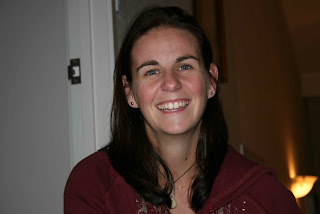
My interest was immediately drawn to Sandy Osborne when I learned she is a police officer who, like myself, has based a work of fiction around her male-dominated working environment. The very original Girl Cop has been published to great reviews and I'm delighted she is here for a virtual coffee and a chat.

www.sandyosborne.com
Hi Sandy. So tell us about how you began your writing career. I believe it was with an article in a local newspaper?

Yes, I responded to a very unflattering picture of me in my local paper taking part in a charity half marathon with a (hopefully!) amusing account of my training programme. This led on to several more articles both locally and nationally which in turn led me to the idea of writing a book. I have made it sound like it happened quickly – it actually spanned nearly 10 years!

What made you want to write about your work environment? How has the news of your book been received?

It’s been received very well and I have had lots of fantastic feedback telling me that I managed to accurately reflect/capture the era of the time. Even male readers (both Police and non-Police) have enjoyed it and are asking for a sequel! I did suffer bullying myself as a probationary officer and I wanted to show that you can win through in the end as I did! The 90’s was a very interesting time of change for women in the Police as we still seemed to be establishing ourselves as ‘equal’ after the disbanding of the Policewomen’s Unit in the 70’s. When I joined in the early 90’s we used to get paid a tights allowance as we were expected to wear our uniform skirts and it was frowned upon if we wore trousers on shifts other than nights. I was definitely a leader of fashion at my station - have you ever tried to scale a wall in a skirt?! I am pleased to say that the girls are undoubtedly on an equal footing these days and have recently been trained alongside the men with the new tasar (stun gun) equipment – Go Girls!

I'm surprised that as late as the 90's women had a special dress code. What an interesting and emotive time to have joined. How have you marketed Girl Cop? On your website you offer author talks. What do they involve?


About the book...
Self funding authors should be under no illusion that selling your book is hard work. As my novel is set in Bath I have tried to use as many local related links as possible. My heroine enjoys a romantic encounter at The Bath Priory Hotel and Spa, and prior to publication I contacted the hotel to ask for permission to include them – not only did they say ‘yes’ but they also offered me a meal for 2 in their Michelin starred restaurant for a draw at my launch. Following on from that they offered a mini break for readers of My Weekly magazine when Girl Cop was reviewed in there in April – fantastic PR for both Girl Cop and the Hotel!

I have a diary of speaker engagements which started as a reciprocal gesture at a luncheon at The Bath Priory Hotel and it has taken off from there – I am now contacted by various groups where I tell the story behind Girl Cop, together with how I got it into print and a summary of my marketing campaign. Alongside this I tell a couple of work related anecdotes in keeping with the label Girl Cop has been given as ‘Bridget Jones in Uniform.’
And of course the online essentials of www.sandyosborne.com a Facebook author page and Twitter @Girlcopnovel.

Really clever marketing moves. I'll try place-name dropping in my next novel :) 

A percentage of your royalties goes to the Police Dependants’ Trust and St Peter’s Hospice. Tell us what they do.

The Police Dependant’s Trust is a national charity. They provide financial support to help ease some of the pressures police families face when an officer has been killed or injured on duty. A worthy cause close to the hearts of all the ‘Police Family.’ St Peter's Hospice is Bristol's only adult hospice caring for local people with life-limiting illnesses. Their commitment is to improve the quality of life of patients while extending care and support to their families and loved ones. I chose to support them because they cared for my colleague, Andy whose collar number I use for my love interest, Alex in the book. Andy’s Mum was delighted with the idea and I have a dedication to them both in the acknowledgements.

You went to Cyprus on a writing break to start Girl Cop 2. What a great idea! Was it conducive or did you find some distractions from the keyboard?

Annie Penn who advises me on matters of publicity and writing in general kept telling me I needed to get on with the sequel and I find it very difficult to find time to sit and write with the demands of work and being a Mum, so I decided the only thing for it was to get away! I was very disciplined to make the most of the week – I sat by the pool in the morning, mulling over ideas and writing a few notes before spending the afternoon on my balcony (I dragged the dressing table out there and set up my netbook with my ipod and a glass of beer for company). Someone needs to invent a computer screen you can see in the sunlight! This picture was taken on the balcony of the restaurant I frequented every evening which was right on the beach. The staff got to know me and fussed over me which was great as I felt a bit self conscious on my own for the first couple of nights! I used to sit and read my kindle (bliss!) and I tweeted this pic as my ‘Shirley Valentine spot’ – although no Tom Conti’s or Alex’s (swoon!) had a part in my holiday! I wrote the first three chapters.

Wow, good work. Would you like to become a full-time writer?

Would I like to become a full-time writer? Well with life so manic at times, I would be tempted to say ‘yes’ – but writing can be a very lonely occupation at times and the knocks and rejections can be hard to take, so in reality I think I would really miss the company of and banter with my workmates (but don’t tell them that!). Its something I look forward to in retirement though!
Read more interviews...

Good luck with the sequel to Girl Cop. I look forward to seeing it's release. It's been lovely talking to you, thanks for taking the time for the chat.

Sunday, September 22, 2013

Virtual Coffee Interview with Helen Hart

Helen Hart is a publisher, author, teacher, indie book reviewer and founding partner of SilverWood Books a publishing consultancy which offers a range of services to help writers get their work into print. Before securing a publishing deal for my book The I.T. Girl, I used SilverWood's editing service, which helped get my manuscript in shape and was a great learning experience.

Hi Helen. I enjoyed working with you and am delighted to have you here for a chat. Tell us about SilverWood Books, how it came about and what its goals are.

SilverWood Books was established in early 2007, at the forefront of the self-publishing revolution. As a professional author myself, I could see that many writers were being let down by so-called "vanity publishers" who charged a lot of money for sub-standard service and shoddy books. I thought there must be a better way of helping writers to publish their own work - and so SilverWood was born. Along with my friendly team, we now provide professional support to hundreds of writers, helping them to produce high quality books which can be confidently marketed in bookshops or online. Our sophisticated production values are recognised to such an extent that we're quickly becoming the choice of mainstream authors when they turn to self-publishing - BBC Radio 4 broadcaster and acclaimed biographer Sarah LeFanu recently chose to work with us on her back list plus a new title 'Dreaming of Rose', which was launched at Foyles bookstore, and USA Today bestseller Helen Hollick has recently produced her eighth historical novel with us. 


The key feature of a SilverWood book is that it matches the production values of books produced by traditional publishing houses such as Harper Collins and Random House - and this means our authors stand a better chance of persuading bookshops to stock their book, and of arranging author events and book signings (as you may know, often self-published and indie titles are refused due to their amateur nature).

We're reasonably selective about the work we take on, and offer our authors generous advice and support through the publishing process and beyond. Our aim is to work with a writer through their whole career rather than on a one-off book, and many authors return to work with us for a number of books, building their fanbase and developing their credibility as professional writers.

What would be grounds for rejecting a manuscript?

Before turning down a manuscript we'd first spend some time finding out the author's aims. 

If they just want to publish for family and friends then they can publish whatever they like and we'll help them make it the best it can be. We're not here to judge, but to help.

However, if a writer has commercial aims, and wants to sell books to general readers and compete in the open marketplace then I feel we have a duty to be honest. If their writing isn't ready for publication (or is simply unpublishable) then we want to help them avoid wasting money. Material that's clearly first draft, or badly written and poorly punctuated simply isn't going to sell. With over 38 million books in print, the marketplace is competitive and personally I don't want to see writers investing hard-earned cash in publishing something that's either not publishable, or needs further polishing to get it ready for publication.

We don't take turning down work lightly. As a writer myself I know how much heart and soul has gone into the writing! We always aim to be sensitive and constructive, offering to help a writer and work with them to improve their writing wherever possible. They can work with one of our editors or writing mentors, or we can recommend literary consultants, or writing groups, and good books on writing - that way the writer can learn their craft and then be successful when they eventually do publish.
  
As an author of 9 novels, what do you like to write about? Do you have something in the works at the moment?

When it comes to my own writing, my most successful novels have been YA (Young Adult) and I tend to write historical fiction about adventurous girls who step outside the boundaries of society as they know it - pirates, vampire-hunters and samurai princesses being my favourites, all written under a variety of pseudonyms! At the moment I don't have anything in the works as I'm focussing on mentoring SilverWood authors - which is surprisingly much more fun and satisfying than writing my own material!

You must have worked with a cross-section of writers, who come to you with their manuscript. Have you witnessed any alternative marketing approaches you'd like to share?

We do work with a wide cross-section of authors, and each brings their own unique skills and past experience to their book promotion. Our most successful authors are those who have written an outstanding book, and who are an authority in their field whatever that may be - especially if that expertise underpins their fiction. For instance one of our authors is a former British Army Intelligence officer who writes Cold War Thrillers and his background lends his work genuine credibility which shines through in the writing. He's also an example of someone with an alternative marketing approach because whenever he does bookstore signings or other author events, he brings along a unique prop - a 6-foot tall plastic mannequin dressed as a soldier, complete with gas mask and camouflage netting. That really attracts attention and is a fantastic talking point. People gravitate towards him (especially little boys and their dads) and that allows the author to talk about his books. Everyone is fascinated, and he sells a lot of books, which is great.

What a great idea! A lesson there for those of us (like myself) who feel a bit shy when it comes to marketing. Do you think self-publishing will become the default option for first-time authors or will traditional publishers evolve to stay in the game?

I think self-publishing is already fast-becoming the default option for first time authors - and for some who are (or were) traditionally published too. We work with many first time authors, but also a high number of successful authors who've decided to take control of their own work, self-publish, and connect directly with their readers.

I don't know what traditional publishers will do as the landscape shifts and develops, but I genuinely hope they do survive because there's a lot they do right - their expertise is unrivalled, and the support they can offer authors in terms of editing, distribution and marketing is hard for self-publishers to replicate. The future is uncertain, though. Research into so-called "digitally disrupted markets" applies the principles to publishing and indicates that maybe only 9 per cent of traditional publishers will recover from the huge changes in the industry. That's a scary thought...

Finally, what advice would you give to writers trying to turn their manuscript into a book?
  1. Take time to learn your craft as a writer - polish, edit and polish again. Don't rush to publish the first draft (or even the third or fourth!) because mistakes will undermine your credibility as a professional writer.
  2. Hire professionals to help you wherever possible - there are millions of books out there in competition with yours, so you genuinely can't afford for yours to have any flaws. Your book should be professionally proofread and typeset, and have a professional cover design (and if you're issuing an ebook edition alongside the paperback, have it expertly formatted by hand rather than run though auto-conversion software, which is a bit of a blunt instrument).
  3. Seriously consider a print edition, not just an ebook - print copies underline your credibility as a serious author, and also open up book promotion opportunities that are closed to ebook-only authors (and many reviewers will only accept print editions).
  4. Choose the right printing method for your book - in most cases POD (print On Demand) has an advantage over more traditional methods, especially if it comes with built-in global distribution.
  5. Find out about commercial aspects of publishing - the books marketplace, trade discounts, and how distribution works.
  6. Develop a book promotion strategy and an author platform before your book is published - that way you hit the ground running on launch day and have eager readers ready and waiting to buy.
  7. Have a pro-active and positive attitude - publishing your own work can be a lonely road unless you're working with a company like SilverWood, so you'll need stamina and self-belief.
  8. If you decide to work with a company to publish your book, do plenty of research because not everyone is professional, honest and reliable. We'd love you to check us out, and if we feel we can't help you then we'll refer you on to someone who can.
  9. Always ask to see a copy of a company's publishing agreement so you know what you're signing up to.
  10. Make sure you keep all rights to your own work.
  11. Consider writing more than one book - books cross-promote each other, and if your readers like your book then they'll be hungry for more (give them what they want).
Read more interviews...

Great advice, thank you, Helen. It's great to know that there are publishing houses like yours out there. Thanks again for taking the time for the interview.

Sunday, September 15, 2013

Virtual Coffee Interview with Val B. Russell

Val B. Russell on Wordpress
Val B. Russell is founder and managing editor of Tuck Magazine - a fast evolving arts magazine with contributions spanning twenty countries. We came in contact when Tuck accepted some poems of mine for publication and I have been a regular reader since.

Hi Val. It's great to have you here. Tuck Magazine is a platform for photography, art, prose and poetry. Tell us about its inception and how it grew.

The concept for Tuck Magazine actually emerged from two seemingly disparate places: cynicism and optimism. At the time I was struggling to reignite the fire of a freelance career that I had let go cold for a few years. What I discovered was that the geography of publishing had changed. Freelance print work was drying up and it was clearly due to online competition. After scouring the internet, my cynicism was soon replaced by hopefulness as there was more work out there than there had ever been for writers, artists, musicians or anyone involved in the media or the arts.

The internet has become a serious publication opportunity for indie writers who have been blocked by larger traditional presses, either because they are too niche oriented, not mainstream enough, or they are too inexperienced to finesse getting past the gatekeepers whose sole purpose is to thin submissions. This atmosphere led to some heavy duty collaborative bridge building between many groups of blogging writers, expanding rapidly around 2008. As a member of a small network of those writers, I was part of a new vanguard of artists.

Out of this I saw a need, filled it and called it Tuck. I created it alone in the evenings after work on a laptop and as it developed I could see it would never be static, but rather an evolving entity much like the art it was sharing. When the magazine went live in October 2011, my goal was to expand the success of that previous collaborative bridge building by bringing artists together from all over the world to share their art with the world. Writers, painters, sculptors, musicians/singers, film makers, actors, dancers and photographers all in one place to create an environment that is positive and uplifting for both the artist and visitor without the taint of the money machine. This not only keeps the art pure but it is also deeply fulfilling for me as both a writer and editor. To have the ability and forum to give many gifted artists their first publishing credit is precious. When I added the Tuck twitter and facebook it attracted an immense interest from both contributors and readers. When art editor Michael Organ joined Tuck, his social media savvy gave us an incredible boost, increasing traffic and providing the contributors with a much wider audience for their work.

We are new, dynamic and our influence globally can be seen in the more than twenty
countries that are represented by our contributors. We are especially having an impact on emerging writers from regions that are often ignored by English speaking publications. A perfect example of Tuck having an effect beyond borders can be seen by the success of Michael Kwaku Kesse Somuah, a young poet from Ghana. Because he was published in Tuck, his career took off and he became the recipient of a prestigious arts award presented to him by the president of Ghana. Subsequent to this, he has won several more awards for his poetry in addition to his readings at conferences and poetry events in both Europe and America. When he contacted me to say that Tuck had been instrumental in that recognition, I was honoured but I also felt justified in my belief that we were indeed having an influence that went beyond things like race, religion, gender and economics. Art is an expression of spirit, that should be freely accessible to everyone and this was precisely the message I took with me to Ottawa Canada this past May. As a guest panelist at The Writers’ Union of Canada AGM I was asked to discuss book reviewing and the changing landscape for writers in 2013, but Tuck Magazine and independently published writers soon became the focus of that conference.

The Writers' Union of Canada
When all was said and done, the Union made a ground breaking decision to finally admit self-published authors into the fold. Although this certainly was significant for all indie writers in Canada and a recognition that we now constitute a serious majority in this profession, the most gratifying part of my participation in this conference was the opportunity to promote Tuck and those who make it the success it is: the contributors. While I sat on the stage, with a projection of Tucks’ main page on the wall behind me, large and making a debut of sorts, every contributor was in that room with me. It was a gratifying and proud moment for all of us who make Tuck happen. 

Congratulations on that success. Great news about Michael Kweku Kesse Somuah - I remember I really liked one of his poems and mentioned it in a blog post about Tuck, some time ago. 

You say "If you've read my poetry, you have met me." What are you drawn to write about? Are you working on something at the moment?

I write from the perspective of personal truth. I have lived a very unusual and at times difficult, occasionally horrific life but within this muddy milieu I have extracted some emotional facts that are the basis of my poetry and fiction. I do often write from an emotional place and this can be very draining at times but without it my stories and poems would lack passion and soul. My writing mandate is quite basic: I write poetry when I’m in pain, essays when I’m angry or outraged, short fiction when I’m bored, book reviews and interviews when I need money for the rent or my curiosity is piqued. My reason for writing longer fiction is a little more complex. It is a catharsis with more than a dash of altruism tossed in. Currently, I've got two novels competing for my time but my focus is more often on Wilson Park, a novel based my childhood experiences in a low income housing project in Canada. This is a grim tale but one that needs to be told. I’m hoping to shop it around sometime in the New Year. The second novel is straight up literary fiction, a tragic story about the loss of a child and how women come to terms with grief. At some point I will also be reissuing ‘The Adventures of Granny Destross and CeeCee’ a children’s fantasy novel I initially self-published a few years ago. The goal is to continue on with the characters within a series of twelve books. Devoting a website solely to this project is a long held dream of mine and to take it as far as I can on my own. There are also approximately three hundred poems I am editing off and on that I've written over the course of seven years that will eventually be ready for small press publication. After that, I intend to sleep and breathe if time permits!

I like that breakdown of creativity according to mood! I think we all write from an emotional place. Does your creativity spread to music or art, since you are involved with the broad artistic spectrum?

My creative expression does bleed into other areas when time permits. I draw/paint and there is a Ukulele on my desk, waiting for me to pick out some tunes. It's difficult to find the time for all the modes of expression I love but when I do pick up an art pencil or paint brush, sing a song or pluck out a melody on an instrument, it feeds my writing when I feel too emotional and blocked to finish a chapter. It is as if the act of stroking paint on a canvass removes emotional debris that frees me up to continue with a story. It's like hand in glove the way each endeavor facilitates the development of the others. In fact, most of the writers I know have their fingers in more than one creative pie at a time.

Your artistic side must feed Tuck as well then. It is visually slick as well as a versatile magazine and the internet has certainly given it a reach it would not have if it were only in print. Have you tailored Tuck to the medium? Do you try to present art that is part of the art zeitgeist or just what appeals to you?

Everything that is published in Tuck shares a common element: originality. The art that is chosen is not always to my liking, which may be surprising but our purpose is to move beyond the borders of our own personal tastes and to give those who read Tuck a variety that is often lacking in other online magazines. There is a risk inherent in doing this as it can be seen as quirky and too unconventional. Often, people like to categorize and define art until it is nothing but packaged junk, and we are determined to maintain our integrity in this regard.

The reach you mention is crucial to our growth as it is a factor that can’t diminish simply based on the truth that the internet is for all intents and purposes, the world. Additionally, the fact that Tuck is a labour of love for myself, editor Michael Organ, and the many contributors who grace our pages, guarantees our ability to succeed. We are in this for the long haul and to above all else, build a relationship between readers/viewers and those who create, by promoting talented new artists and sharing their best work. 

I'm always curious about how people design the look of their site. How did you come up with the Tuck logo?

The logo took about a week to put together in total. The silhouette of the woman brandishing the weapon, was an intentional clip art find as I wanted any image associated with the magazine to reflect one particular definition of the word 'Tuck' which is a type of sword, as is a pen when wielded deftly and with purpose. I fiddled around with a logo maker for the text, chose a theme and colour scheme, purchased the domain and found a host. The guts of magazine took a great deal of patience and time to implement but eventually it became close to my original vision of how it should look and feel to the reader.


Tell us about your activist interests. 

I am very much involved in issues relating to child abuse. In fact, I've just finished an interview with memoirist and sexual abuse survivor Tina Renton for Herizon’s magazine. It is my ultimate goal to create a program for abused children that will involve the arts as a path to emotional and psychological healing. As a survivor myself, the pain and suffering of children who are abused and/or live in poverty is never far from my mind and it is the driving force behind my writing, to use my skill with words to fight the fear and apathy that not only allows child abuse to continue but to flourish. 


I think art is at it's most powerful when used to raise awareness but also it is a simple tool that can help children communicate. Good luck with the programme. What's in store for Tuck in the future? 

Tuck has been going through some changes this summer and we are excited to be launching a new page this fall that will incorporate expanded video and audio. We are also in the process of bringing regular contributors on board that we will weave into the fabric of Tuck gradually throughout 2014. As we are very much about displaying a borderless world, at least artistically, we have also determined that we have a responsibility and desire to become more activist and socially motivated. Obviously it is the very nature of the artist to not only filter and express the health of the society and era in which they live but it is also their role to use their art to prompt change and social progress through awareness.

We have also not ruled out print and we have been known to toss around terms like ‘anthology’ and ‘best of’ but this is still early days for us to consider the print option. Tuck will continue to redefine itself over and over again as the years pass and we intend to remain part of landscape for many years to come. As long as there is art and the editors breathe, Tuck will exist. 

Read more interviews...
I'm excited to hear you are incorporating video and audio. Congratulations on the success of Tuck and thanks for taking the time from your busy schedule for this chat, it has been great to get insight into this dynamic magazine and the woman behind it!

Sunday, August 25, 2013

Virtual Coffee Interview with Andrew Blackman

AndrewBlackman.net
Andrew Blackman's first novel won the Luke Bitmead Bursary for new writers. Now working on his third novel and providing an editing service on the side, I have a few questions for him...

Hi Andrew. First of all, please tell us how you became a writer and what sort of thing you're drawn to write about?

I wanted to be a writer from an early age, so naturally I started out by becoming a corporate banker on Wall Street. Hmm... I think my logic at the time was that I would make a lot of money, retire young and then write, but I quickly realised this wasn't such a good plan. I quit and became a reporter at The Wall Street Journal, and at first it seemed ideal: it was writing, but with a regular salary. But then I found myself waking up at 6am every day to write my own stories, and knew that I wouldn't be really happy until I at least tried to do what I’d always wanted to do. So I quit, moved back to London and started to focus on fiction writing, while temping at night and at weekends to pay the bills. After a few years of failure, I finally got a break and got my first novel published.

My writing, I suppose, reflects some of my life experiences. I like to write about characters who are struggling to assert their own identities and wishes in the face of the world’s contradictory expectations. I write about people trying to live authentic lives, and the compromises they’re often forced to make in the process. 

How did your first book, On The Holloway Road get published? Did you have strong ideas on the final product or were you happy to put it in the hands of your publishers?

It was a very straightforward process, actually, involving no mysterious contacts or connections or chance events. I just submitted my manuscript to a contest for unpublished writers, the Luke Bitmead Bursary, and a few months later discovered to my amazement that I’d won. The prize was a cheque for £2,500, and a publishing contract with Legend Press. About seven months later, the book came out.


Luckily there wasn't much conflict with my publishers over the final product. They only edited the book quite lightly, and when I disagreed with some edits they were mostly happy to go with my version (except for a few strange issues of “house style”). I left the cover design and the blurb to them, because I decided they knew more about it than I did. 

What a great start! Did you feel the need to get an agent after that? Have you stayed with the same publisher?

Yes, I was clear from the beginning that I wanted an agent as soon as possible. I signed up with my agent after I won the prize and before On the Holloway Road was published. Even though I already had the publishing deal, and even though I stayed with the same publisher for my second novel, having an agent helped because he could negotiate the details of the contracts on my behalf. I would have found that difficult to do myself, firstly because I don't feel as if I know enough about the intricacies of rights, royalties, ebook terms, etc, and secondly because I want to have a good relationship with my publisher. It's good to have someone else to go in and negotiate, so that I can just concentrate on working with them on the editing, publicity, etc. I also had a few approaches for film rights, and he handled those for me too. I think having an agent will be more useful as my career progresses and there's more complex stuff to handle, but I wanted to have one from the start.


You offer an editing service, as well as regularly write articles and blog. How do you balance these activities with writing?

No matter how busy I am, I always make sure that writing fiction is the first thing I do each morning. And most importantly, I do it with the internet switched off! Only when I am happy with what I've accomplished do I put it away and start on the other stuff. I find that the most important thing in creative writing is not time, but mental space. If you have time, but your mind is cluttered with other things, then you won’t get anything done. So I resist the temptation to work on anything else in the mornings, and write while my mind is fresh. When I fire up Twitter, I know that’s the end of my creativity for the day!

All successful writers say discipline is the key - that's a good example. Recently you moved from Barbados back to London. A big cultural switch! How does the change effect your creativity?

Well, since then I've moved from London to Crete, so another big cultural switch! The moving obviously disrupts my creativity for a while, because there’s a lot of logistical stuff to be done each time you move anywhere, let alone internationally. But once I settle down, it’s worth it. Moving to a new place gives me new ideas, a new way of seeing the world. The worst thing for a writer is to get stuck in a rut. Good fiction relies on fresh ideas and fresh images, and I find that living in a different place helps recharge my imagination. Plus, to be quite honest, a big reason for moving first to Barbados and then to Crete was that the cost of living in both places is much lower than in London. Here I can write full-time and just about get by, whereas in London it was a constant struggle just to pay the rent and council tax and keep the lights on each month. Living a simpler, cheaper life means more time and energy for creative work.
Amazon.co.uk

On The Holloway Road and A Virtual Love have both received high praise. What can we expect from you next?

I’m working on my third novel, which is quite different. I like to write in different styles and with different subject matter each time. Certain themes are common in all three – identity, authenticity, living a life you want rather than the life other people expect, the compromises people make, etc. But they’re explored in quite different ways. The new novel, although it’s mostly contemporary, also has a historical component, which is something I've never done before. The historical part is based on some real-life family history involving a distant ancestor of mine who gave up a claim to the throne of Spain in order to move to England and become one of the early nineteenth-century photographers. 
Read more interviews...

That sounds exactly like living the life you want rather than what people expect - inspiring. It must be nice to research something in the family. Good luck with it and thanks for taking the time away from the beach for the chat!

Sunday, August 18, 2013

Virtual Coffee Interview with Francis Xavier Labiran

Wordjar.com
@Wordjar
Wordjar are a poetry magazine that have produced 9 anthologies with varying themes from Love to The City. They have graciously included two of my poems over the years and I'm excited to interview the founder and editor Francis Xavier Labiran.

Hi Francis. Tell us about launching Wordjar and the stages of its development.

What I love about Wordjar is how organic it has been from its inception to where it is now. Most people don’t know this but Wordjar began as a blog. Back in 2010 I started a poetry blog, where I posted my poems and the work of people that I admired. Eventually people started to ask to feature on my blog and that is when I had my Eureka moment. I thought why not put all these poems together in an anthology, which led to the birth of ‘Write to inspire publishing’. The name was soon changed due to an unfortunate occurrence, which turned out to be a blessing. I couldn’t give you a step by step development, as a lot of what we have done has been without a business plan. To this day I feel as if we have been guided by an overwhelming purpose, which has allowed us to publish the 9 anthologies so far. However now is the time where you will see us implementing a more concrete strategy to take Wordjar forward.

 
@fxl_revolution
It's a nice idea that you started a blog not knowing where it would lead... You write your own poetry too - what inspires you? Do you have personal ambitions as a poet?

When it comes to poetry, my inspiration comes from the life experiences that I feel are the most vivid. I am the type of person who usually doesn’t marinate in moments for too long, and therefore I am always moving to the next thing, almost afraid that I will die if I stopped. However there are a few moments that make me pause momentarily, while sustaining that feeling of life, those are the moments that inspire me. An example of this would be the birth of my daughter, a moment that showed me how powerful we can be as human beings, and simultaneously how fragile life is. Let that sink into your mind for a moment, it is a beautiful image.

I definitely would like to publish a book or series of books in the future that tells a story using poetry, page poetry is definitely the way forward for me.

I used to perform spoken word for about two years, but then I stopped doing that. I realised that when it comes to poetry, I preferred page to stage. My reason for this is the page has many voices. Each reader reads poetry in a different way and takes something different from what they read. In comparison when performing on stage, your voice is the voice of the piece. I realised that I fell in love with poetry because of the multiple interpretations that it provokes, the different images that it paints, this is what I want to do, paint on the canvas of the mind.

What do you think is interesting about poetry at the moment?


I think poetry in the UK is changing, or perhaps growing new branches. Spoken word is becoming more and more popular to the point that it seems that almost everyone can call themselves a poet. In the last 3 years I have seen poetry becoming so popular, which I love, because it is such a beautiful medium of expression. However what worries me is that I have also read and heard a lot of work that I cannot classify as poetry. I see people creating things purely for comedic value and giving it an ‘A,B’ rhyming scheme, and then call it poetry, that is something I am not too comfortable with. I feel on an urban level, comedic poetry is more championed than the beautiful art that I grew up with; it will be interesting to see what the future holds. 

I suppose like music, easy listening is more popular but hopefully there'll always be a thriving alternative. Do you feel the internet has given page poetry a chance to change it's image - reach an audience it wouldn't reach otherwise?


Of course. Through the use of blogs, poets are now able to build a worldwide audience for their work. This is further enabled by social media, a poet's readership can be increased exponentially if they leverage the internet in the right way. Another advantage of the internet, is that poetry is a click away. Less thought has to be put into clicking a link than it does to picking up a book, and this is where eBooks come in. All you have to do to access an eBook is click a link, and then you can download it to your tablet/smart phone, and then you have it with you wherever you go. At Wordjar we have noticed that through our eBook's we have managed to 'persuade' people to read poetry, who may have otherwise labelled poetry uncool, simply by making it more convenient for them to read it.

What do you do to get a break from the world of literature?

At the moment I hardly get to break away for long, simply because there is so much going on at Wordjar. So most of the time I am deep into my work, then I stick my head out of my hole just to try and take in what is going on in the world. However when I do get some time on my hands, I try to spend time with family and friends as much as I can. I also try to make time for football, the gym, music and business interests, as these are some of my passions. However a lot of what I do requires that I read quite a bit, so every day I am reading some sort of literature.

What is the future for WordJar? Will you branch out into other forms of prose?

It is funny that you ask, because we are currently working on our first non-poetry publication. I can’t give too much a way, but it will touch on Generation Y, the generation that I belong to. As for the future of Wordjar, I do not want to over promise, but there is a lot on the way. We will continue to offer opportunities for writers to be involved with us, through anthologies, books, blogs and other mediums. We are undergoing a moment of transition, where we are trying to escape that association in people’s mind that goes “Wordjar, poetry”. We are fine with “Poetry, Wordjar”. However we want people to think “Wordjar, poetry, short stories, x, y and z.” There are exciting times ahead, we are relatively new to what we do, but we believe that we can make a positive impact.


Your mention of Generation Y is intriguing. I will look forward to seeing what that's about. Your last anthology, Haiku, focused on a specific kind of poetry and coupled each haiku with an image. I thought that was really original. Will we see more mixing of artistic forms from Wordjar? 

In my opinion, Haikus and images were meant to be together. Haikus, though short are known to paint powerful images. Similarly pictures, as the famous saying goes, 'say a thousand words'. What we did with Haiku was try to couple poetry and images that were sending out the same message, I would like to think that we achieved that. At Wordjar, we will try to mix art forms in the future, however they must have a workable chemistry.

Read more interviews...

I think Wordjar is doing something original and it will be exciting to see what you produce in the future. Thanks for the chat, Francis, and best of luck with it!

Tuesday, August 13, 2013

Stuck in the Middle

The Beginning

I've got these two old friends, maybe from school, now in their early 30s living in a flat in London. The first part of the story sees these two reverse roles. The settled one, we'll call her Alpha, loses control over a few things in her life and ends up needing help from the restless one. The restless one, we'll call Beta, through helping her friend, sorts a few things out.

The Middle ?

So now I'm at this role reversal. But why is it interesting? How can this situation be used to produce conflict? Should some crisis happen that Alpha used to take care of but in her new found chaos, it's up to Beta? Also, due to this reversal, we've got some resentment simmering. The roles they had in respect to each other has been disturbed so that their friendship doesn't really work any more, though on the surface it's still ticking along. How could this be interesting? Should one need the help of the other? - but that would be a repeated plot point.

The End

I already know the end. We work out why that resentment developed, map it back to things in the past. Ultimately the two women have to work out a new way of relating to each other because their lives have changed and they have changed. It's something that does happen in longterm friendships and I know how to play that out - it all ties back to why Alpha needed Beta's help in the first place.

But I'm stuck in the middle. I need a plot filler. An ex-boyfriend. A crisis. A practical problem - a mouse in the kitchen / an alien spaceship in the back garden.

Suggestions, please?

Sunday, August 11, 2013

Virtual Coffee Interview with Melissa Pearl

Melissa Pearl Blog
@MelissaPearlG
The author of 7 YA novels and situated in China, it's great to get Melissa Pearl's thoughts on writing and the industry. I wish her novels were around when I was a YA, with an exotic touch to these role models for young women.

Hi Melissa. You've actually lived in a number of different countries. When did you start writing and how has the travel influenced it?

I started seriously writing about 12 years ago. Before that, I had always had stories running through my head, but it wasn't until I was 23 that I wrote my first full-length novel. I fell in love with the craft immediately and set about learning how to improve. I guess the travel has influenced me in the sense that I have been able to experience many different cultures. I think it has helped me learn to understand people better and how to read them. I love getting inside the human psyche and figuring out why characters act the way they do. Seeing different cultures has broadened my perspective. We may all be human, but we are all raised very differently and this has a huge impact on how we react to the things life throws at us. 

I love the idea of the Taste Test, a free collaborative novella containing book extracts. Tell us about that, how has it been received? Also what has been your most effective marketing plan?

The Taste Test was not my idea originally, but I ended up taking the reins and pulling it all together in the end. It was a mission, but also a pleasure. I got to work with some fantastic authors. There are so many cool people in the writing world :) We made it FREE so that readers could sample the goods and hopefully discover an author or two they had never heard of. The download numbers have been really great and I think it has lead to sales for all of us. It's all about positive exposure, right?


On Amazon.com
My most successful marketing move has been to put Golden Blood (my first published book) online for FREE. I have since run some ads and this has lead to a huge spike in sales, which in turn has grown my fan base and led to many more sales. It has been an absolute thrill to see people enjoying my work.

Paid advertising is out of fashion these days, interesting to hear that you've found it so valuable. Given that the onus is on authors to do their own marketing, do you think first time authors should self-publish by default?

I have found self-publishing a great start to my career. I have learned SO much along the way, plus had the added bonus of earning a little money and entertaining readers at the same time. It's been a hard slog, but the right move for me. Doors have started opening a little wider in the last few months and after nearly two years, I feel like I'm starting to turn a corner and build some constant momentum.

How does writing a trilogy compare with writing individual books? Do you have a favourite amongst your work?


Writing a trilogy is much more in-depth and therefore harder, but it's no less fun than an individual book. Because I chose to release The Elements Trilogy in quick succession, it turned into a mammoth undertaking. I'm nearly there. Unleashed (Bk 3) is due out August 2013. It's been a big adventure and one I am very proud of completing...although I'm not in a hurry to repeat it just yet :D

I love all my stories for different reasons, but Betwixt is still my favourite. I love the characters so much. I love Nicole's voice and I'm really happy with how the story turned out in the end. I've actually just started writing a prequel novella (Before) and will be releasing that and a sequel novella (Beyond) later this year. It's really cool to hang out with the characters again.

I love the cover of Betwixt. In fact all the covers look great. How did you ensure that? Do you use the same agency each time?

I am lucky enough to have the world's best friend who knows graphic design and a husband who understands photography. Between the two of them, plus a few favours from a couple of other people, I have managed to pull together all my covers. However, my friend is getting a little busy with family life and her own sewing business (ZealousDesign) so for the first time, I have branched out and asked Eden Crane Design to do my next cover. She's done SUCH an amazing job. I can't wait to reveal the cover to everyone really soon :D 


That's exciting. Please do post a link in comments when the cover is revealed. What can we expect from you next? Would you write for a younger or older audience?
 
I have plans to write a few NA novels next year, but YA is still my main genre for now. Next year I have some exciting things planned. I have two new series starting (a YA leading into NA Paranormal Romance and a YA Contemporary Mystery/Romance? - still deciding on exact genre :D) I'll release the first books in both series, hopefully in the first half of 2014. I also have a couple of stand-alone novels I want to release. (a YA Contemp. Romance and an NA Contemp. Romance) And if I'm REALLY organised, I will release book two in each of the above series as well.

Read more interviews...

I'm so excited!! Bring on 2014 :D

Wow, that is a lot on your plate! Best of luck with all of it! It's been really interesting to get a peak at how you've developed as a writer and as a publisher. Thanks for the chat and do let us know about Unleashed...